Archives
- 2026-08
- 2026-07
- 2026-06
- 2026-05
- 2026-04
- 2026-03
- 2026-02
- 2026-01
- 2025-12
- 2025-11
- 2025-10
- 2023-07
- 2023-06
- 2023-05
- 2023-04
- 2023-03
- 2023-02
- 2023-01
- 2022-12
- 2022-11
- 2022-10
- 2022-09
- 2022-08
- 2022-07
- 2022-06
- 2022-05
- 2022-04
- 2022-03
- 2022-02
- 2022-01
- 2021-12
- 2021-11
- 2021-10
- 2021-09
- 2021-08
- 2021-07
- 2021-06
- 2021-05
- 2021-04
- 2021-03
- 2021-02
- 2021-01
- 2020-12
- 2020-11
- 2020-10
- 2020-09
- 2020-08
- 2020-07
- 2020-06
- 2020-05
- 2020-04
- 2020-03
- 2020-02
- 2020-01
- 2019-12
- 2019-11
- 2019-10
- 2019-09
- 2019-08
- 2019-07
- 2019-06
- 2019-05
- 2019-04
- 2018-11
- 2018-10
- 2018-07
-
uPAR promotes cell associated proteolysis
2021-11-10
uPAR promotes cell-associated proteolysis by binding to uPA which locally converts plasminogen into active plasmin [10]. Ligand-engaged uPAR also acts as a potent regulator of cell migration and matrix attachment. Being a membrane receptor, uPAR needs to interact with extracellular matrix (ECM) prot
-
The improved glucose tolerance of Ffar R W R W
2021-11-10
The improved glucose tolerance of Ffar1R258W/R258W mice on HFD was unexpected. In combination with similar fasting blood glucose levels, the significant lower fasting plasma insulin of mutant mice compared to wild-type mice is indicative of improved insulin sensitivity. However, peripheral insulin r
-
To examine the biochemical characteristics of FPPS in
2021-11-10
To examine the biochemical characteristics of FPPS in Drosophila, DmFPPS has been functionally expressed in E. coli. The protein displays properties similar to mammalian FPPS, with some notable differences, including the ability to efficiently couple the homologous substrate, homodimethylallyl dipho
-
br Results br Discussion br STAR Methods
2021-11-10

Results Discussion STAR★Methods Acknowledgments The authors thank Drs. Michael Wegner, Ron Waclaw, and Ed Hurlock for critical comments. We thank Drs. Lihui Tsai and Jiang Wu for CHD8 and ASH2L-expressing vectors, respectively, Dr. Yueh-Chiang Hu for generating transgenic lines, and Jing
-
TLRs were originally identified as pathogen associated
2021-11-10
TLRs were originally identified as pathogen-associated molecular pattern recognition receptors that recognized exogenous ligands in response to infection [31]. In cirrhotic mice or patients, the gastrointestinal tract produces and absorbs considerable bacterial LPS with increased permeability of the
-
Introduction Histamine Imidazolyl ethylamine is an important
2021-11-10
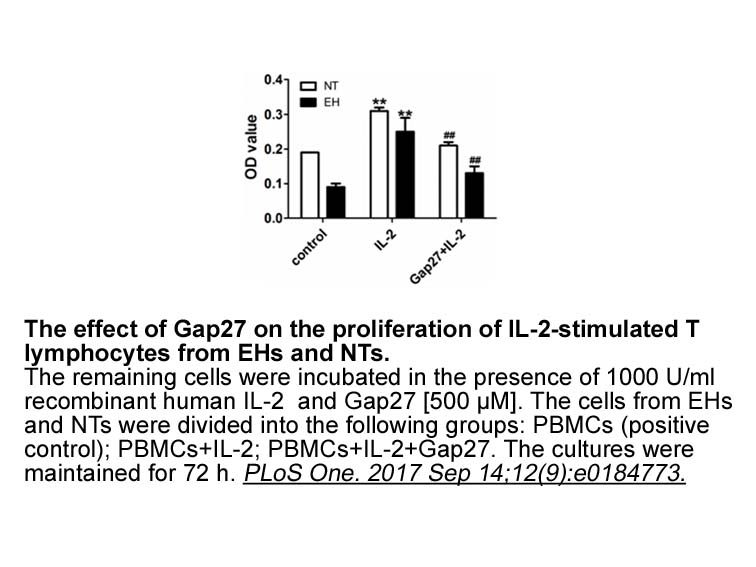
Introduction Histamine [2-(4-Imidazolyl)-ethylamine] is an important mediator of many physiological and pathological processes including inflammation, gastric Flavin adenine dinucleotide secretion, neuromodulation, regulation of immune function, cell proliferation and differentiation, among others.
-
Since its development the HCV
2021-11-09
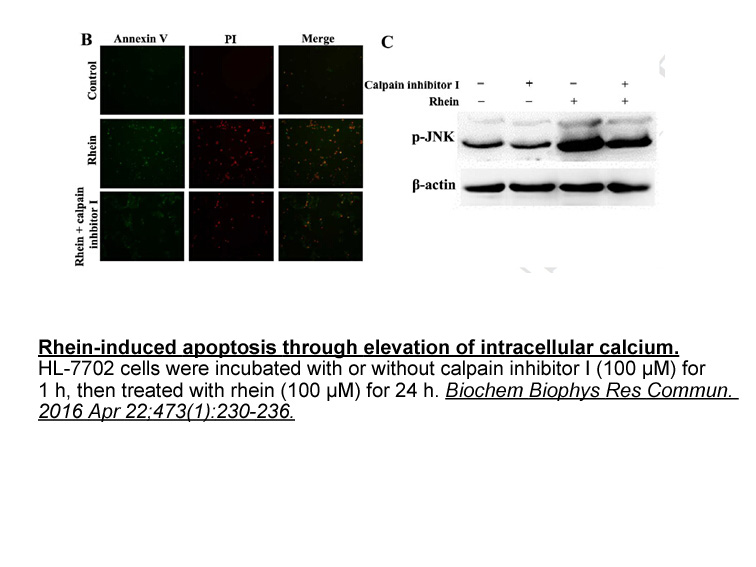
Since its development, the HCV replicon system (Lohmann et al., 1999) has been a critical tool in the HCV antiviral discovery process (Gottwein et al., 2009, Imhof and Simmonds, 2010, Lohmann et al., 1999, Pietschmann et al., 2001, Imhof and Simmonds, 2010, Gottwein et al., 2009). The replicon assay
-
Heterocysts provide the required microoxic environment for t
2021-11-09
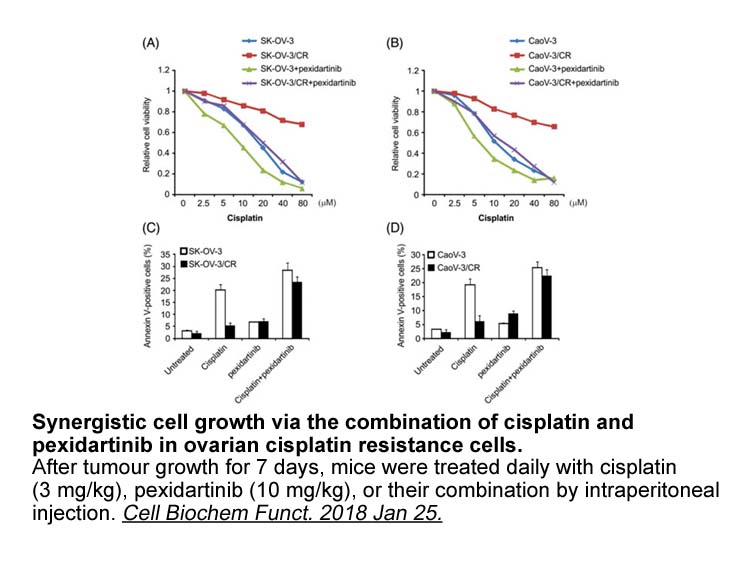
Heterocysts provide the required microoxic environment for the oxygen-sensitive N2-fixing nitrogenase enzyme complex. This environment is formed during heterocyst development. Developing heterocysts inactivate photosystem II and degrade antenna pigments, thereby decreasing oxygenic photosynthesis (F
-
In conclusion we have designed
2021-11-09
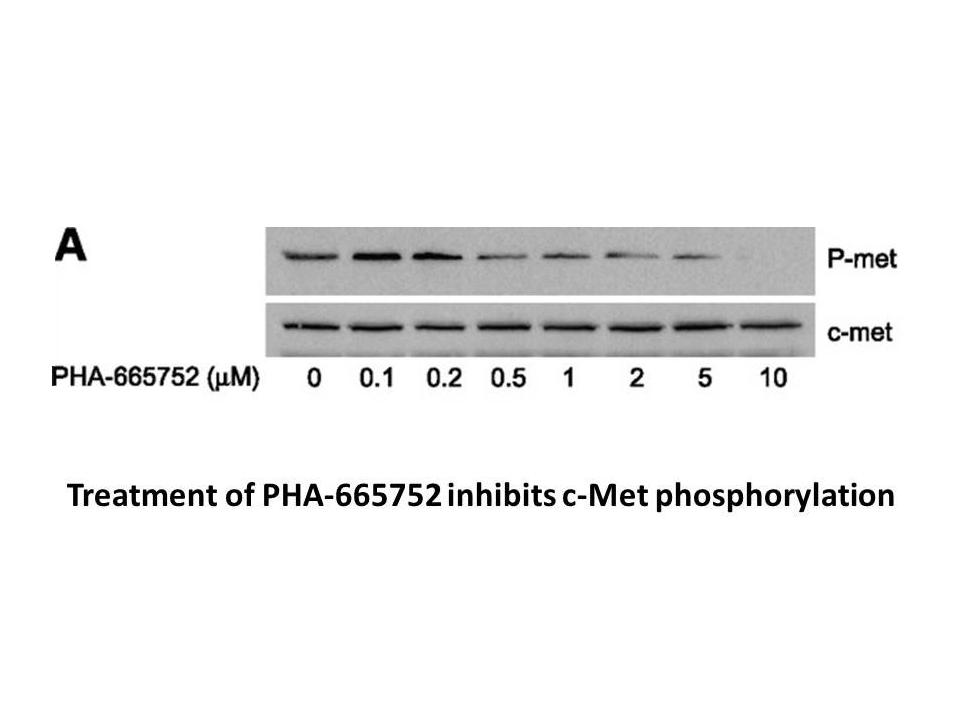
In conclusion, we have designed and characterized a novel series of EAAT-blockers, exemplified by (-[4-(2-bromo-4,5-difluorophenoxy)phenyl]--asparagine)—a potent, selective, competitive non-substrate inhibitor of EAAT-2. As one of the most potent and selective EAAT-2 inhibitors identified to date, c
-
directly In addition to GABA mediated mIPSCs glutamate media
2021-11-09
In addition to GABA-mediated mIPSCs, glutamate-mediated miniature excitatory postsynaptic potentials (mEPSCs) regulate the excitability of the nervous system. GluRs can be divided into ionic and metabotropic GluRs. Ionotropic GluRs can be pharmacologically differentiated by specific binding of the
-
br Introduction The glucagon receptor GCGR is
2021-11-09

Introduction The glucagon receptor (GCGR) is a G-protein-coupled receptor expressed mainly in the liver and kidney. Upon glucagon binding, it activates the stimulatory G protein (Gs) and increases cAMP level, subsequently transducing glucagon signaling involved in glucose, amino acids and lipid m
-
br Role of ghrelin in
2021-11-09

Role of ghrelin in reward and addiction In addition to its well-known effects on sphingosine homeostasis regulation at the hypothalamic level [reviews in (Al Massadi et al., 2017, Muller et al., 2015)], ghrelin also has the ability to increase food motivation acting on hypothalamic and extra-hyp
-
Regulation of Gja involves a
2021-11-09
Regulation of Gja4 involves a member of the wingless-type MMTV integration site family, WNT4. Mice deficient in Wnt4 had reduced (30%) expression of GJA1 compared to WT mice [40]. It is thought that WNT signaling regulates GJA1 expression and GJIC in granulosa ghrelin receptor by modulating beta-ca
-
Our biological data also showed that
2021-11-09
Our biological data also showed that, in presence of LEDGF/p75, R or S of glycerol T instead of T4, T8 or T12 loop in the T30695-GQ differently affected the integration activity of the enzyme (Table 2), whereas the position but not the chirality of glycerol T affected the inhibitory efficiency of T3
-
Histamine which was used as the agonist had low potencies
2021-11-09
Histamine, which was used as the agonist, had low potencies in our functional experiments when compared to its affinity from binding studies (e.g. Lim et al., 2005). This phenomenon is related to the fact that the coupling of the presynaptic receptor to the transduction machinery and the final funct
11893 records 272/793 page Previous Next First page 上5页 271272273274275 下5页 Last page